
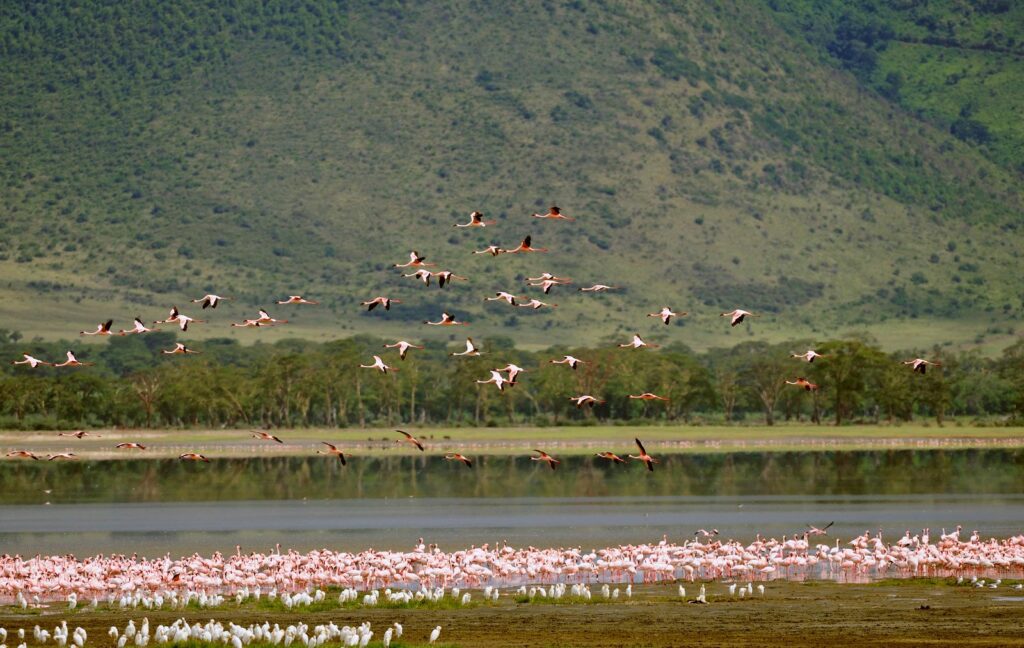
The Best of Lake Manyara: The park is one of Tanzania’s most captivating safari destinations, offering remarkable wildlife, diverse landscapes, and memorable outdoor experiences. Lake Manyara is located in northern Tanzania, covering approximately 648.7 km² at the base of the Great Rift Valley escarpment. The park is famous for its tree-climbing lions, large troops of baboons, beautiful groundwater forests, and seasonal gatherings of flamingos. Visitors explore evergreen forests, open grasslands, acacia woodlands, wetlands, and the alkaline lake, creating opportunities to feel both intimate and extraordinary during the experience.
What makes the best of Lake Manyara National Park
About two-thirds of Lake Manyara National Park is the glittering alkaline lake that gives the park its name. What makes the park so captivating is its remarkable diversity packed into a small, accessible area where, within a single morning, you can dive through the lush groundwater forest. The park’s greatest attraction is its remarkable combination of scenery and wildlife, the great rift valley escarpment that rises above the surrounding landscape, which provides a dramatic background for game drives and photography.
Lake Manyara is particularly associated with tree-climbing lions, whereby these animals climb trees for shelter and better sighting of the park to track their prey. Other animals that contribute to the park’s rich wildlife experience include elephants, buffaloes, giraffes, zebras, hippos, and antelopes.
Activities carried out in the Park
Game drives: The park shelters large herds of elephants, buffaloes, zebras, giraffes, impalas, baboons, hippos, and tree-climbing lions, where spotting these elusive cats may feel more adventurous. During the game drive, you will encounter these animals feeding among trees, moving through the woodland and grazing in open areas. Morning game drives are often the best compared to evening game drives because wildlife is often active during cooler hours.
Bird watching: Lake Manyara is every birder’s dream. The park harbors more than 400 species of birds; these include aquatic, woodland, and forest species. Pelicans, hornbills, storks, cormorants, and herons gather along the shoreline, while raptors soar overhead, which makes the atmosphere around them utterly enchanting.
Canopy walk: Visitors who do canopy walks may walk along the suspended bridges, observing the vegetation around. You will see birds moving around, monkeys jumping on tree branches, and butterflies flying around. It is a thrilling family-friendly activity that blends gentle exercise with breathtaking scenery.
Visit the Hot Springs: The park features geothermal hot springs known as Maji Moto. Visitors come to these areas to appreciate the geological forces that shape the Great Rift Valley. The contrast between the escarpment, lake shores, wetlands, and woodland creates beautiful photographic opportunities.
Cultural visits: Guests sometimes prefer cultural visits where they get a chance to interact with the local communities, such as Mto wa Mbu. They learn about their local life and Tanzania’s cultural diversity.
Best months to visit The Best of Lake Manyara
Dry season (June-October): This is generally the best time for wildlife viewing, like elephants, giraffes, buffaloes, hippos, and predators. Shorter grass, less dense vegetation, water sources shrink, and animals gather in predictable spots, making sightings easier and more frequent. The weather stays pleasant, and roads remain firm and accessible.
Wet season (November-May): Also known as the green season, this time of the year brings greener landscapes, seasonal rainfall, and great birdwatching. The period is spectacular for birdwatching as migratory species arrive and the scenery becomes particularly attractive for nature photography. Flamingo numbers often peak as water levels rise.
How to get to the Park
The park is relatively straightforward because it lies along Tanzania’s northern safari circuit.
By road: The park is approximately 125-130 km west of Arusha, a comfortable 2-hour drive on a smooth tarmac highway depending on traffic, stops, and the exact destination.
By air: Visitors fly into Kilimanjaro International Airport or Julius Nyerere International Airport in Dar es Salaam and then connect onwards to Arusha by road. A short flight treats you to stunning aerial views of the Rift Valley escarpment before you land just minutes from the park gate.

