
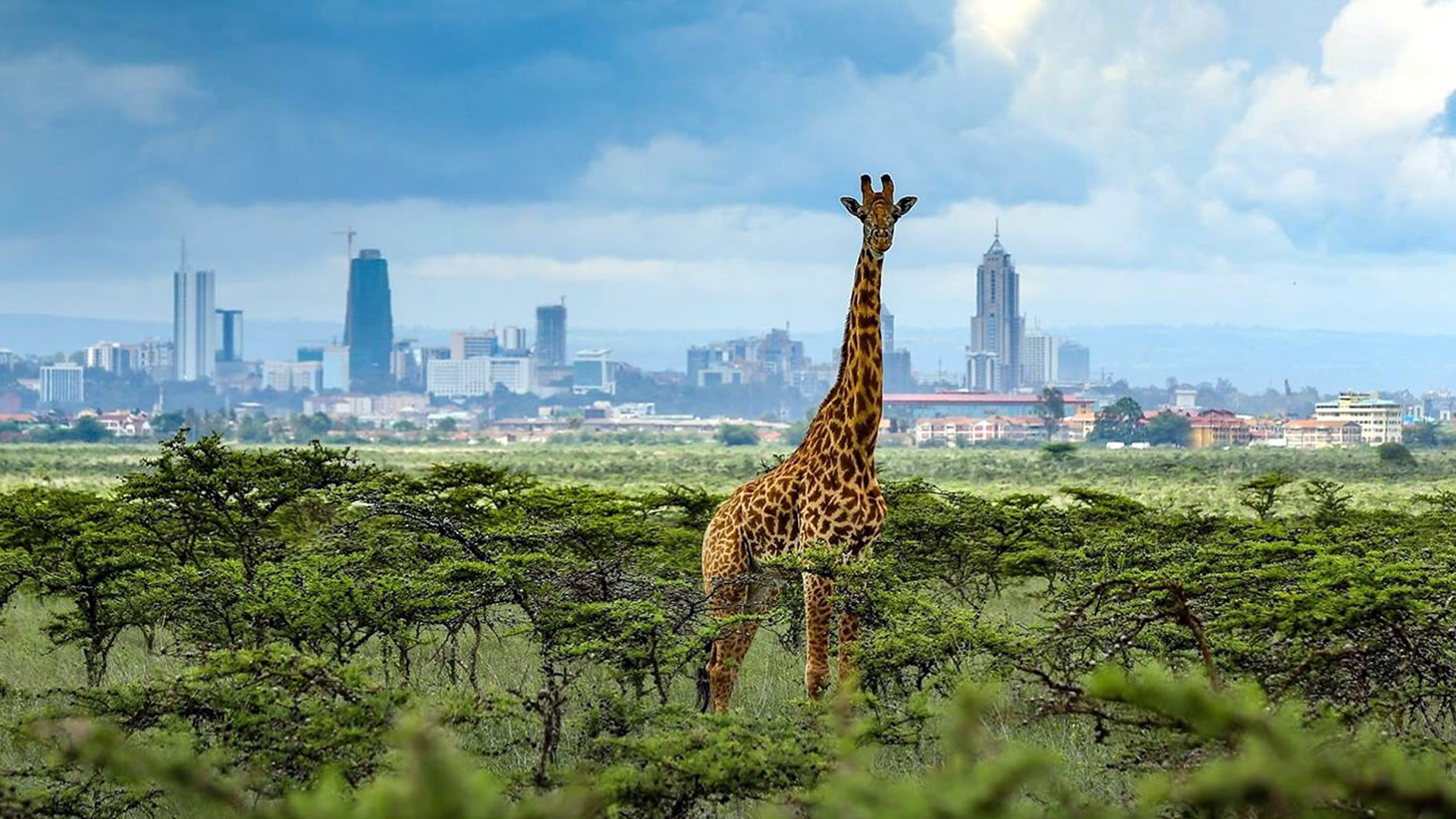
 Nairobi National Park (The World’s Only Wildlife Capital) is 7 km away from the heart of Nairobi city. Nairobi Game Park is the world’s only protected area with diverse wildlife and birds near the capital city. Nairobi was established in 1946 and became the first park to be created not just in Kenya but also in East Africa.
By size, Nairobi National Park covers the land are of 117 sq. km and is set at an altitudinal range of 1500 to 1800 meters. The park’s landscape features unique vegetation characterized by vast plains and savanna grassland. It also features highland forests, riverine and acacia. These serve as the key habitats to diversity of wildlife and birdlife. Visitors on wildlife tour at the Nairobi National Park enjoy a glimpse of their favorite wildlife with breathtaking views of the skyscraper.
Nairobi National Park features the Ivory site monument which is a landmark of wildlife conservation. The landmark lies at the spot where the Kenya President Daniel Arap Moi burnt the Ivory as a way to send a message to all the poachers. The move was intended to stop killing and abduction of wildlife as well as ivory trade.
The Kifaru Ark which means the Rhino Sanctuary played a great role toward successful rhino conservation in the area. The word Kifaru means rhino (in Swahili) and happens to be the most successful rhino sanctuary in Kenyan history.
Wildlife to encounter
Different wildlife to see on Kenya tour in Nairobi Park include small and big mammal species. The Park’s diverse wildlife include gazelles, zebras, giraffes, impalas, baboons, elands, African leopards, Coke’s hartebeest, cheetahs, black rhinos, and waterbucks. This protected area also holds wildlife such as black-backed jackals, hippos, and hyenas.
Bird species
A record of about 400 species of birds including endemic and migratory species exist in Nairobi National Park. The park boasts of birds such as the Kori bustard, Grey crowned crane, White-bellied bustard, Abyssinian thrush, White-headed vulture, ostriches, Fischer’s lovebird, Jackson’s widowbird, Corncrakes, Lesser Kestrel, White-headed vultures, Pallid harrier, Hartlaub’s bustards, Martial eagle, and monarch flycatchers.
Other birds to expect to find on a tour in Nairobi Game Park include cuckoo shrike, sooty falcon, Amur falcon, Shelley’s francolins, Northern pied babblers, hammerkop, yellow-necked spurfowl, saddle-billed stork, Sharpe’s long claw, purple grenadier, white-bowed coucal, tawny eagle, little bee-eaters, black-winged kite, White-faced whistling-duck, Rupell’s vultures, and marabou storks.
Additional birds to find in this park include common nightingale, African water rail, African darters, Jackson window bird and many others.
Activities to do in Nairobi National Park
Game drives
Nairobi Game Park is most famous for its rewarding game viewing experiences. A guided game drive through Nairobi National Park is perfectly done using a 4×4 safari car. During the game drive, expect to encounter different wildlife including the common warthogs, spotted hyenas, lions, leopards, African buffaloes, hartebeest, black-backed jackals, rhinos, gazelles, elands, and waterbucks, etc.
Visitors interested in game viewing in Nairobi National Park can opt for the morning session or afternoon. Each session offers tourists great encounters of the park’s diverse wildlife and birds.
Birding
Birding or bird-watching excursions are perfect for visitors interested in exploring more about the birds in Nairobi National Park. The birds you are likely to encounter include the African crowned eagle, Kori bustards, martial eagle, fox kestrel, Martial eagle, blacksmith lapwing, secretary bird, ostriches and more.
Best locations to consider for bird-watching in this park include Karura swamp, Mangua swamp, Ngong road forest sanctuary, and Paradise lost. Around November and April, nature enthusiasts on birding excursion also have a chance to encounter many migratory birds.
Nature walks
Nature walks also offer visitors a great chance to explore Nairobi National Park’s diverse wildlife and birds. They are the best option for you to connect with nature. During the guided nature walks, expect to encounter wildlife in the varied habitats.
Guided walking to the hippo pools and view points
Embark on guided walks to some of the picnic sites like the Athi River banks. On walking trail to the hippo pools, visitors can explore variety of species both wildlife and birds.
When to visit Nairobi National Park
Nairobi National Park is accessible for holidays at any time of the year. But the most favorite time to experience the best of Nairobi Game Park is around dry season. The dry months run from June, July, August to September –the best months for game viewing. The rainy months come with heavy rains thus posing great challenge for nature enthusiasts on wildlife tour. The wet or rainy months start from March to May then October to November.
Safari Lodge to stay in Nairobi National Park Kenya
Good quality accommodation alternatives exist in and around Nairobi National Park Kenya. They are available in varying options including budget, midrange and luxury. Top lodges to book for your overnight stay in Nairobi Game Park include Eka Hotel, Emakoko Lodge, African Heritage House, Acacia Camp Swara Plains and Ole Sereni Hotel, Panari Hotel.
Getting to Nairobi National Park
Nairobi National Park is accessible through the 2 gates. Overall, the park seven (7) gates including Banda gate (Service gate), Mbagathi gate (Service gate), Langata road, KWS headquarters, and Langata gate.
From Nairobi, expect to drive 7 km to the Nairobi National Park and from the Jomo Kenyatta International Airport is 10 km. By air, visitors can also take a flight up to the Jomo Kenyatta International Airport to Wilson Airport where you can transfer direct to the park.
Park regulations to follow
Like other national parks in Kenya, visitors are advised to observe the set rules and regulations while in Nairobi National Park. They include;
- Driving in Nairobi National Park is only permitted between 6:00 am and 6:00 pm.
- Keep your driving speed to 50 km per hour.
- Wildlife have the right of way.
- Never be tempted to feed the animals/
- Don’t pick or cut/destroy any vegetation/remove any object of biological interest.
- Camping is acceptable but only in the designated sites.
- Picnicking should be done in the designated sites.
- Don’t harass wildlife in any form.
- Keep the park clean.
