
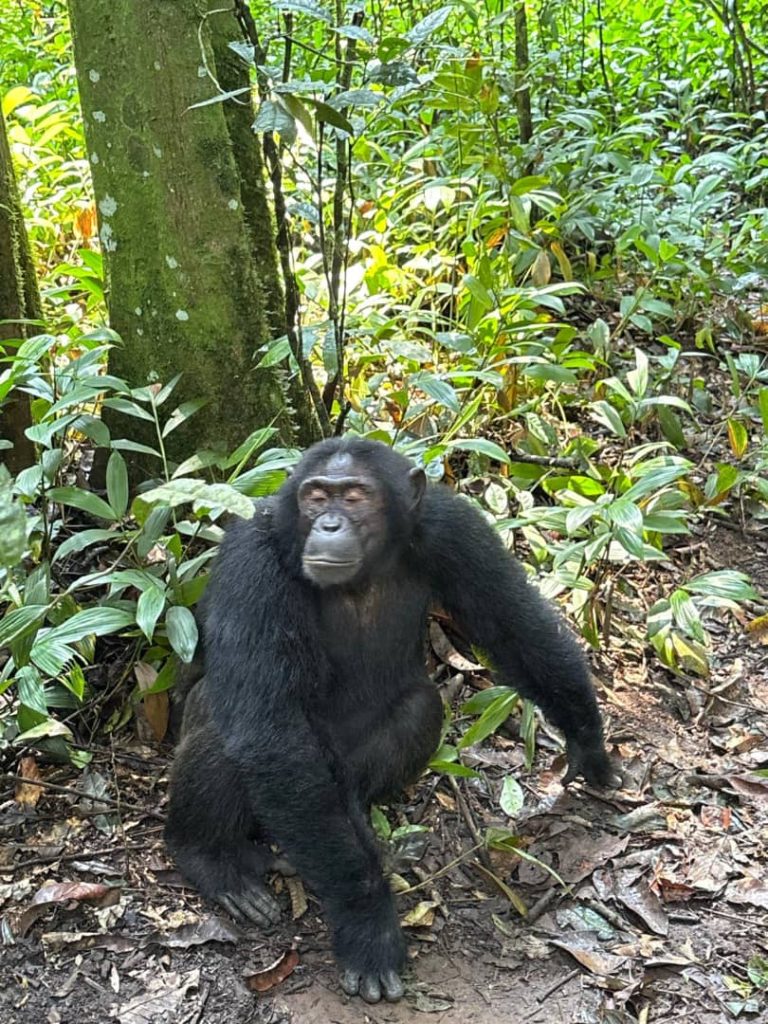
Chimpanzee trekking in Rwanda: This takes place mainly in Nyungwe Forest National Park, a large mountain rainforest in the southwest of the country. Rangers lead small groups to habituated chimpanzees for a one-hour encounter. Unlike gorilla trekking, which centers on slow-moving family groups, chimp tracking is faster, noisier, and less predictable. Success depends on where the animals have decided to feed that morning. This guide explains where chimpanzee trekking in Rwanda happens, how a day works, what permits involve, and when to go.
Where chimpanzee trekking in Rwanda happens
Nyungwe is the main and best-established site. The park covers more than 1,000 square kilometers of montane forest. It is managed by African Parks in partnership with the Rwanda Development Board. Habituated chimpanzees are followed from different parts of the park, with operators commonly describing trailheads at Uwinka, Gisakura, and Kitabi, and a separate habituated community in the small Cyamudongo forest. Which sector you track in depends on the permit allocation and where the chimpanzees are, so ask your operator how it works.
Gishwati-Mukura National Park in the northwest is Rwanda’s emerging chimpanzee destination, created in 2015 by joining two fragmented forests. It is less developed for visitors than Nyungwe.
What does a chimpanzee trek involve?
Treks start early, often around 5 to 6 am, to match the chimpanzees’ morning activity. After a short briefing at the reception, a small group follows a guide and trackers into the forest. Ask your operator which reception point you will use and what time to arrive.
The walk can last anywhere from 1-6 hours depending on where the chimpanzees are. And it often means steep, muddy slopes, stream crossings, and off-trail scrambling rather than a simple path. Once the group is found, you spend with them for up to one hour. When the chimpanzees travel, you move with them, which makes the encounter more dynamic than a gorilla visit.
What to expect during chimpanzee trekking in Rwanda
Common chimpanzees are active, vocal, and often high in the canopy. Expect pant-hoots echoing through the forest, fruit-feeding in the treetops, grooming sessions on the ground, and sudden bursts of movement.
Photographs can be difficult in dim light and dense foliage, so a camera that handles low light helps more than a long lens. Sightings are not guaranteed. Operators generally describe chimpanzee tracking as less predictable than gorilla trekking. Treat the experience as a forest walk with a real chance of a memorable encounter, not a certain one.
Permits, costs, and age requirements
A chimpanzee trekking permit is required, valid for one person on one day, and is not transferable. Permits are issued through the Rwanda Development Board or the park’s operator, or booked for you by a tour company. The permit name and details should match your passport.
Prices are lower than gorilla permits, but published figures differ between operators and change over time. Park entry may be charged separately, so confirm the current rate and what it includes with the park or your operator rather than relying on an older figure.
The minimum age is reported as 15 or 16 depending on the source, so check before booking with a teenager. Group sizes are small, and one operator cites a limit of eight people per group, which is another reason to reserve early.
Best time to trek chimpanzees in Rwanda
Nyungwe is a rainforest, so rain can fall in any month, and the forest is damp even in the dry season. The drier periods, roughly June to September and December to February, usually make trails firmer and travel easier, which is why they are the most popular.
The long rains, around March to May, bring muddy, slippery slopes, and the short rains of about October to November are also wet. Chimpanzee trekking in Rwanda continues through the rains, and some travelers prefer the greener forest and lighter crowds, but it demands good footwear and a waterproof layer. Fruiting trees influence where the chimpanzees feed more than the calendar does.
Getting to Nyungwe and where to stay
Nyungwe is a long road journey from Kigali, typically between four and six hours depending on the sector and traffic, so most itineraries include at least one night near the park. Some travelers fly between Kigali and Kamembe airport near Rusizi and drive from there, which shortens the overland leg, though flight availability should be checked.
Accommodation ranges from budget and midrange lodges to high-end options such as Nyungwe House and Nyungwe Forest Lodge. Staying close to the Uwinka or Gisakura side makes the early start easier, so choose a base according to where your trek is likely to begin.
Fitness, clothing, and preparation
This is a moderately demanding activity. Slopes can be steep and slippery, and the length of the walk is unpredictable, so reasonable fitness and some practice walking uphill help. Wear sturdy waterproof boots with grip, long trousers and long sleeves to protect against nettles and insects, and bring a rain jacket, gloves, a hat, and water. Pack light, with a small day bag, and keep camera gear in a waterproof cover. Hiring a porter is a good option for anyone unsure of the terrain, and it supports local income.
Rules for responsible chimpanzee trekking in Rwanda
Rangers set the rules, and they exist to protect both visitors and animals. Keep the distance your guide specifies, speak quietly, avoid sudden movements, and never feed or touch the chimpanzees.
Chimpanzees are susceptible to human respiratory illnesses, so anyone with a cough, cold, or other infection should tell the guide and may be asked to stay behind.
Do not litter, stay with the group, and keep flash photography off. Following these rules is also what keeps habituated groups relaxed around people, which directly affects the quality of future visits.
How chimpanzee trekking compares with gorilla trekking
The two experiences suit different travellers. Gorilla trekking in Volcanoes National Park involves stable family groups that tend to move slowly and are usually found within a few hours, with a very high chance of a sighting.
Chimpanzee trekking in Rwanda is more athletic and less certain, but it gives a livelier, noisier encounter and usually costs less. Travellers who want one primate highlight often choose gorillas first and add chimpanzees if time and budget allow. Those who enjoy forest walking and birding may find Nyungwe the more rewarding forest experience.
Ready to discover Rwanda’s wild chimpanzees? Plan a guided trek in Nyungwe Forest National Park and experience the beauty of one of Africa’s remarkable rainforests.
Contact us to arrange your chimpanzee trekking permit, accommodation, transport, and guided forest experience. Book ahead, confirm the latest trekking requirements, and prepare for an unforgettable encounter with Rwanda’s wildlife.

