
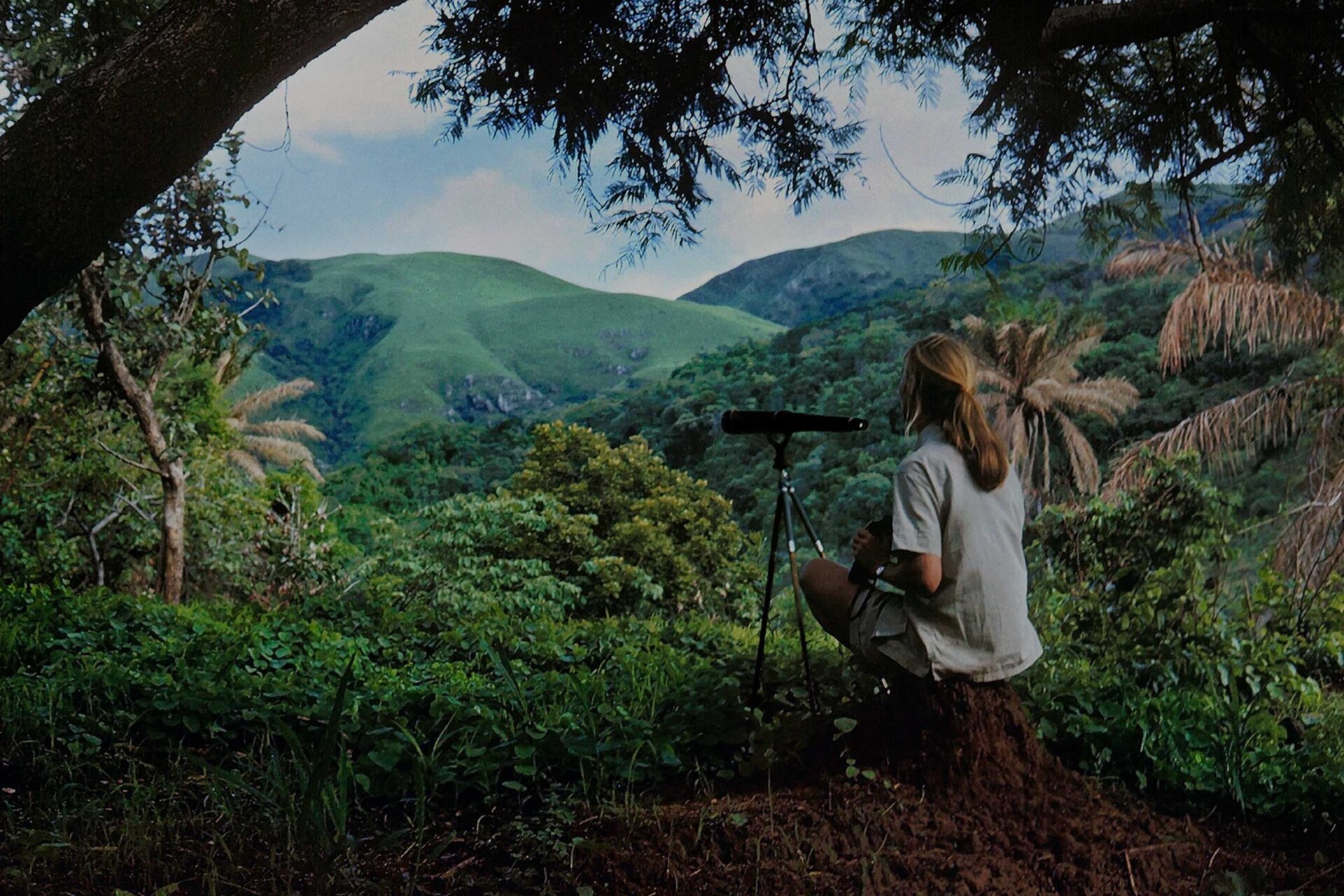
 Gombe National Park is Tanzania’s smallest National Park. Gombe covers the land area of 52 sq. km and is located in the western rift escarpment on Lake Tanganyika. The Park’s breathtaking valleys comprise the Guinea-Congolean forests and its upper slopes consist of Miombo woodland of Zambezian type. The two floral species make up the semi-decidous forests along the park’s valley. The different habitat offer refuge to different species of animals including primates and birds.
Gombe National Park (Gombe Stream National Park) began as a Game Reserve in 1943 and upgraded to a National Park in 1968. The upgrade follows the visit of Dr Jane Goodall to the area to conduct her research on chimpanzees and their behaviors.
Key wildlife species
The main wildlife species to find in Gombe National Park consist of primates and other mammal species. The primates in Gombe include the red colobus monkeys, chimpanzees, blue monkeys, vervet monkeys, olive monkeys, and others. In addition, the park protects the hippos, bush pigs, leopards, bushbucks, and other mammals.
Bird species
A total of 200 species of birds survive in the Gombe Stream National Park. They include forest species of birds, aquatic and migratory species. The different birds to identify on a birding excursion in Gombe include palm-nut vultures, African broadbill, Ross’s turacos, African fish eagle, Peter’s twin spot, slender-billed greenbul, yellow-whiskered greenbul, leaf-love, plain greenbul, willow warblers, and double toothed barbet.
Additional birds in Gombe National Park include bat hawk, little sparrow hawk, long-crested eagle, white-backed vultures, African harrier hawks, black-winged kite, Ayres’s eagle, crowned eagle, common hoopoe, olive woodpeckers, green-backed woodpeckers, European bee-eaters, cinnamon-chested bee-eaters, common kestrel, African pygmy kingfishers, pied kingfishers, giant kingfishers, tropical boubou, Luhders bushrike, and Fork-tailed drongo.
Gombe National Park also features bird species such as the spectacled weaver bird, grosbeak weaver, Southern red bishops, purple grenadier, Bronze manikin, blue-breasted cordon-bleu, Kordofan sparrow, African wagtail, mountain wagtail, grey-backed camaroptera, Angolan swallow, red-rumped swallow, white-headed saw-wing, barn swallow, snow-crowned robin chat, red-capped robin chap, white-browed robin chat, familiar chat, collared palm thrush, and many others.
Tourist Activities to do in Gombe National Park
Gombe National Park offers exciting experiences such as chimpanzee tracking, birding, and nature walks.
Chimpanzee tracking
Chimpanzee tracking is the key primate adventure that awaits any enthusiastic primate trekker in Gombe National Park. Gombe is one of the places in Tanzania where a section of chimpanzee communities have undergone through habituation and are open for visitors to explore. During the chimpanzee tracking session, visitors assemble for briefing for them to get to know the set rules and regulations. The park ranger guide are allocated to accompany you on the search for the chimpanzees.
The main aim of the tracking chimpanzees in Gombe is for you to explore more about how chimpanzees behave and taking pictures. In addition to chimp encounters, tourists also have a chance to see other primates including the red-tailed monkeys, vervet monkeys, olive baboons, and floral species.
Birding
Gombe National Park protects a significant bird population that make it an iconic birding destination. During the birding excursion, expect to search for bird species such as the red-capped robin chat, African fish eagle, Peters twin spot, Ross’s turacos, Double toothed barbet, crested Guineafowl, helmeted guineafowl, emerald-spotted wood-dove, laughing dove, tambourine dove, hatrlaub’s turacos, Jacobin cuckoos, yellowbill, marabou, yellow-billed stork, long-tailed cormorant, African darters, great cormorant, African sacred ibis, cattle egret, palm-nut vulture, black-winged kite, osprey, white-winged tern, long-crested eagle, bat hawk, African harrier hawk, common barn owl, Gabar goshawk, tawny eagle, mountain buzzard, speckled mouse bird, yellow-rumped tinker bird, little bee-eaters, cinnamon-chested bee-eaters, European bee-eaters, fork-tailed drongo, black-throated wattle-eye, tropical boubou, olive sunbird, and African paradise flycatchers.
Other birds to expect to find on a birding excursion in Gombe Stream National Park include the red-chested sunbird, collared sunbirds, dark-backed weavers, African fire-finch, Northern brown-throated weavers, Southern red bishops, Grosbeak weaver, Bronze Mannikin, African wagtail, barn swallow, Angolan swallow, plain greenbul, slender-billed greenbul, leaf love, Sombre greenbul, and willow warblers, etc.
Nature walks
Guided nature walks usher visitors deep into the jungles of Gombe where they get to a chance to have a close interaction with nature. The nature walks allow you to search for birds, primates, and other species.
When should you expect to visit Gombe National Park?
Gombe National Park is open for visitor exploration at any time of the year. But visitors who are interested in primate exploration can visit the park around the dry season when the weather conditions are favorable. The dry season runs from June to October and the wet or rainy season starts from March to May then another phase starts from September to November.
In case you are interested in the migratory species of birds, then consider traveling to Gombe from December to March. The rest of the other wet months are also ideal for bird sightings.
Where to stay
The key accommodation options to consider for overnight stays in and around Gombe National Park include Mbali Mbali Gombe Lodge, and Gombe Bandas. When planning to have your next holiday in Gombe, it is important to find a place close to where you intend to begin your activities. Accommodation facilities far from the park make it challenging for you to catch up with the morning sessions.
How to get to Gombe National Park
Gombe National Park can be accessed by a boat starting from Kigoma town. By air, you can take the scheduled or chartered flight from Arusha or Dar-es-Salaam to Kigoma Airport.
What to pack for a Tanzania safari holiday in Gombe
A complete Tanzania safari requires you to pack wisely and ensure that you begin with essentials. The packing list should include long-sleeved shirts, long trousers, a rain jacket, insect repellents, a daypack, sunscreens, a safari hat, first aid kit, a camera, a pair of binoculars, comfortable shoes and should be waterproof, etc.
Conclusively, Gombe National Park should be a must-visit in Tanzania. The park offers authentic wilderness experience. It is one of the destination very few visitors have explored thus guaranteeing you that true African wilderness.
