
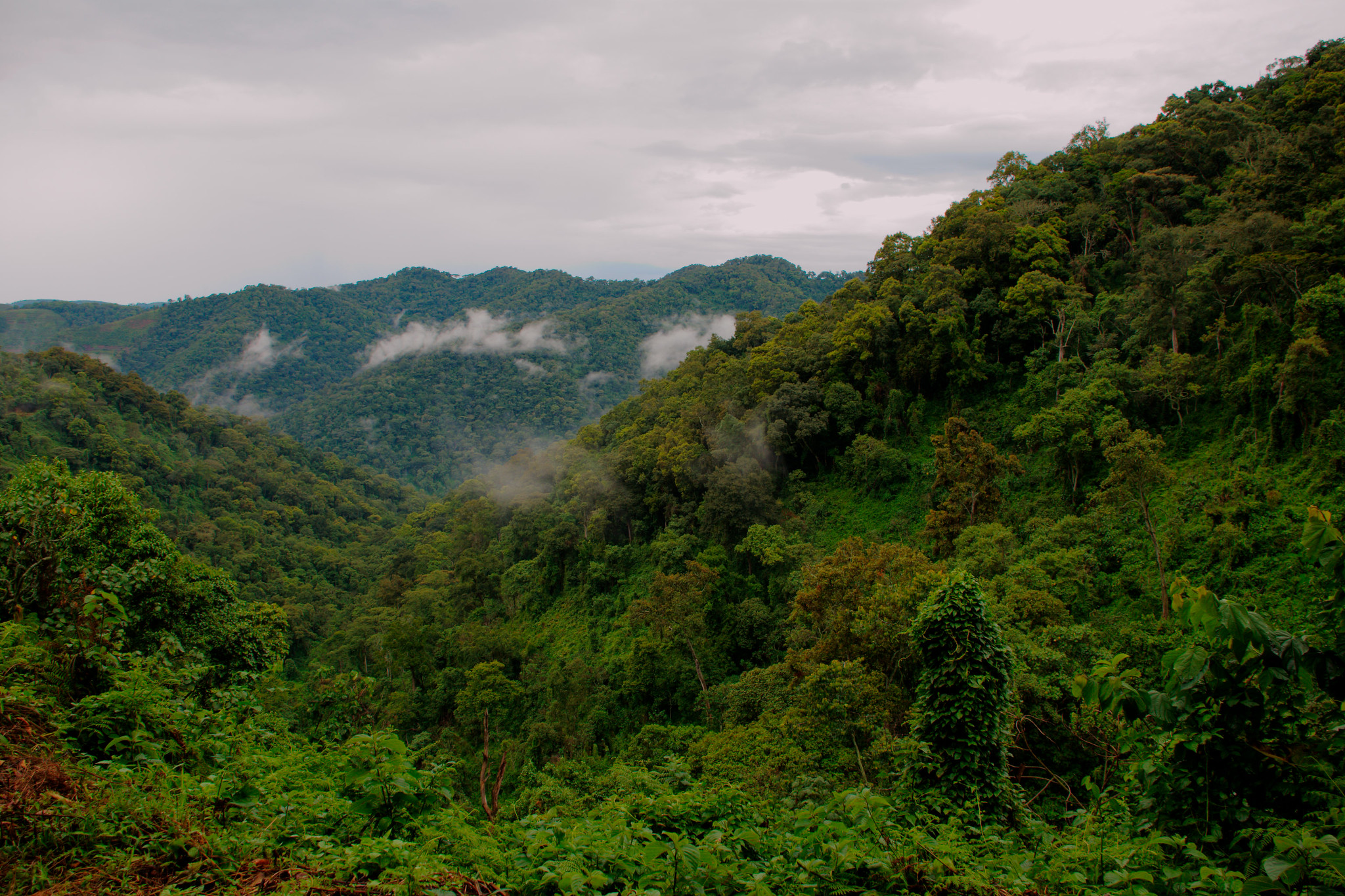
 Bwindi Impenetrable National Park dates back around 25000 years ago, and it is one of the tropical rain forests that is said not to have been disorganized during the ice age. This park was gazetted in 1991 as a national park and in 1994 was declared a world heritage site by UNESCO due to its reach in biodiversity.
The park measures around 331 km² and covers or is shared by the districts of Kanungu, Kisoro, and Rubanda. The park has around 120 species of mammals, 200 species of trees, 88 species of moths, 51 reptile species, 310 species of birds, and 348 species of birds.
A number of animals inhabit the forest, but most especially half of the world’s total population of gorillas is found in this park. It also harbors other animals like the African forest elephants, chimpanzees, buffaloes, baboons, vervet monkeys, black and white colobus monkeys, red-tailed monkeys, red colobus monkeys, blue monkeys, l’hoest monkeys, and yellow-backed duikers, as well as birds like the Cassin’s grey flycatcher, black bee eater, black billed turaco, African green bull, and African broad-bill birds.
Brown-necked parrot, regal sunbird, grazer’s broad-bill, Kivu ground thrush, mountain oriole, handsome spur fowl, cinnamon-chested bee eater, bar-tailed trogon, Doherty’s bush shrike, dusky crimson wing, mountain masks apalis, strange weaver, black-faced rufous warbler, yellow-eyed black flycatcher, strange weaver, Rwenzori turaco, Rwenzori batis Shelley’s crimson wing, red-throated alethe, crowned horn bill, yellow-streaked greenbelt, and grazer’s swamp warbler. and many more.
This national park was originally inhabited by the pygmy/batwa people that lived within the forest, who were brought down by the government in 1991 only because they used to compete with the gorillas in search of food like plants, fruits, shoots, and honey, thus fighting with them.
Also, they used to hunt other animals like the duikers and bush backs as food, and also the local people poaching these animals resulted in a government gazette to protect their biodiversity for the next generation.
This national park is found in southwestern Uganda, neighboring the Democratic Republic of Congo at the edge of the Great Albertine Rift Valley that obtained its name from the locals due to its thickness in the bamboo interspersed in the large forest of hard wood, covered with ferns and vines that make it thick and dark; thus, the locals named the place of darkness Bwindi.
THREE DAYS OF GORILLA TRACKING IN BWINDI NATIONAL PARK
