
Wildlife in Akagera National Park: Akagera National Park in eastern Rwanda, on the border with Tanzania, is the country’s only Big Five destination. Lions, elephants, rhinos, buffalo, and leopards are all increasing under long-term conservation work. They share the park with hippos, giraffes, zebras, several antelope species, and close to 500 bird species. Akagera is also an instructive conservation story: lions disappeared by 2001 and were brought back in 2015. This guide covers what lives in the park, where each group of animals is most likely to be found, and how timing and habitat shape a visit.
How the park’s wildlife was rebuilt
Akagera was established in 1934 and covers 1,122 square kilometers. Poaching, conflict in the 1990s and the arrival of large cattle herds pushed wildlife out, and some species were lost entirely. Since 2010 the park has been managed by African Parks in partnership with the Rwanda Development Board. Anti-poaching patrols, regular monitoring, and an electric boundary fence that limits conflict with neighboring communities have all supported the recovery.
This history matters to visitors for a practical reason. Several species here are reintroduced populations that rangers track closely. Their numbers are known and still changing, and sightings are good but never guaranteed.
The Wildlife in Akagera National Park
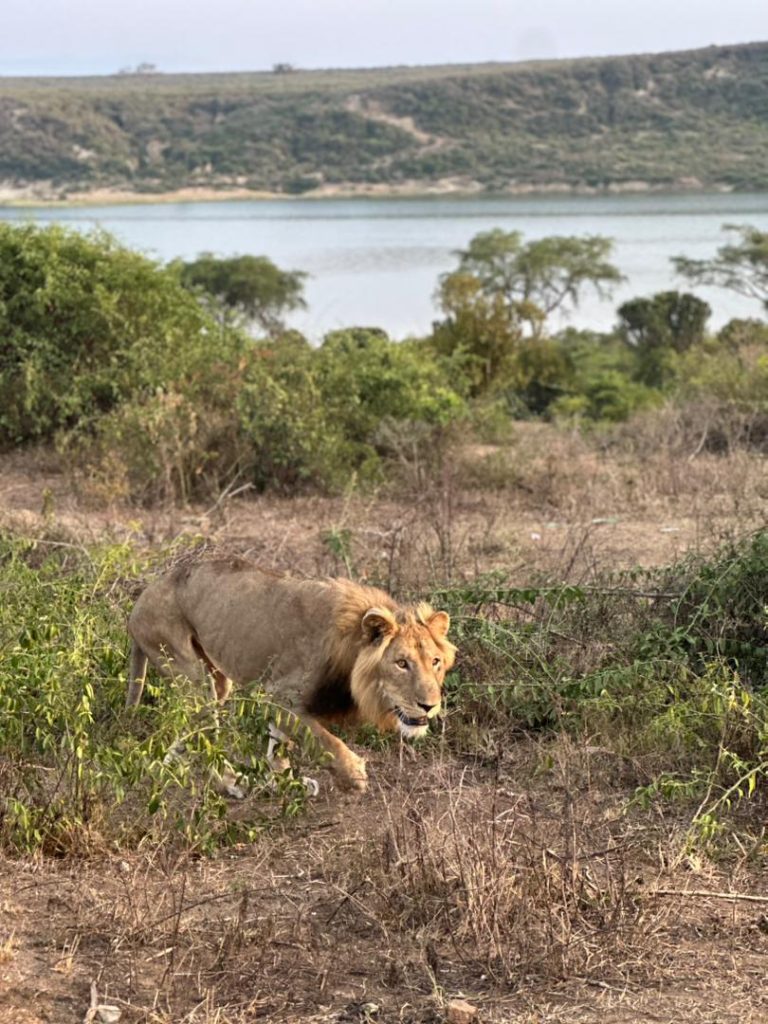
Lions: Lions once numbered around 300 in Akagera but were gone by 2001, and the 2015 reintroduction restarted the population. Recent reporting puts the park at no fewer than 70 lions. Some animals carry GPS collars, which helps rangers locate prides. Most sightings happen on the open savannah in the early morning or late afternoon, since lions rest in shade through the heat of the day.
Elephants: Akagera’s elephants descend from 26 young animals moved from Bugesera District in 1975. Estimates vary by source and date, from about 142 animals to at least 150, and the park’s identification database held 106 individually recorded elephants at the start of 2026. You can find herds around the lakes and in woodland, often near water in the dry months.
Rhinos: Rhinos are the most heavily managed species in the park. Eastern black rhinos were returned in 2017 and 2019, and 30 southern white rhinos arrived in 2021. In June 2025 a further 70 white rhinos were brought from South Africa, reported as the largest single rhino translocation on record. Cumulative introductions are about 100 white and 23 black rhinos, but that counts animals introduced, not the current population. Rhinos tend to be the least predictable of the five to see. Black rhinos favor thicker bush, so a guide with fresh tracking information makes a real difference.
Buffalo and leopards: Buffalo are common on the plains and often appear in large herds. Leopards are the opposite. They are present but not individually tracked like lions and rhinos, and they are seen mostly at dusk or on night drives where those are offered. A first full leopard research project began in March 2026, so knowledge of the population should improve.
Other mammals worth looking for
Away from the wildlife in Akagera National Park, Akagera is a good place to see plains game. Giraffes, plains zebra, impala, topi, waterbuck, and eland are commonly reported on the savannah, and roan antelope are a more special find. Hippos crowd the lake edges and river channels, and Nile crocodiles share the same water.
Spotted hyenas, jackals, and smaller cats such as servals live in the park, though they take more luck or a night drive. Baboons and vervet monkeys are easy to spot near the roads. The elusive sitatunga lives in the papyrus swamps and is rarely seen.
Birds of Akagera National Park
Akagera supports close to 500 bird species, which makes it one of Rwanda’s strongest birding sites alongside its forest parks. The swamps and lakes hold the headline species. Papyrus gonoleks skulk in the reed beds, African fish eagles call over the open water, and the shoebill is a rare and sought-after sighting in the wetlands.
Birdwatchers should not count on it. Savannah and woodland birds add variety on a standard game drive, so a keen birder gets plenty of species without any special effort.
Where to look for wildlife in Akagera National Park
The landscape is varied, and the animals follow it. The open savannah and rolling hills hold most of the plains game: lions and buffalo.
The chain of lakes, including Lake Ihema, Lake Shakani, and Lake Rwanyakazinga, draws elephants, hippos, crocodiles, and waterbirds.
The papyrus swamps along the Akagera River are the realm of sitatunga and the swamp specialists among the birds. The northern part of the park near Magashi is quieter, with fewer vehicles, and is reached mainly through lodge-based stays.
Boat trips on Lake Ihema offer a different angle from a vehicle. They suit hippos, crocodiles, and birds, and they get you close to shorelines the roads do not reach.
When is the best time for wildlife viewing?
Akagera has two drier periods, roughly June to September and December to February. In these months animals concentrate around water, and the grass is lower, so sightings are easier.
During the rains, roughly from March to May and October to November, the park turns green and birdlife is excellent, but wildlife in Akagera National Park spreads out, and some tracks become slow-going. Wildlife is more active in the early morning and late afternoon whatever the season, so game drives are best timed around dawn and dusk.
Planning around the wildlife
The park is a few hours’ drive from Kigali, and both a southern and a northern entrance are used depending on where you are staying, so confirm access and current conditions with the park or your operator before traveling.
Two to three days gives a realistic chance at most of the major species, since a single drive can miss them. A ranger-guided drive improves your odds at hard-to-spot animals such as rhinos and leopards, and booking a night drive adds nocturnal species that daytime visits never show. For costs, lodging, and routes, see the main Akagera National Park guide.
Frequently asked questions about wildlife in Akagera National Park
Does Akagera have all of the Big Five? Yes. Lions, leopards, elephants, buffalo, and rhinos all live there, and Akagera is Rwanda’s only park with the full set.
Is it possible to see all five in one visit? It’s possible, but not reliable. Leopards and rhinos are the hardest, so a stay of more than one day improves your chances.
Is Akagera good for birdwatching? Yes. With close to 500 species recorded, its wetlands and savannah suit both casual and dedicated birders. The shoebill is a hoped-for sighting, not an expected one.
Are the rhinos in Akagera wild? They live free in the park but were reintroduced, and rangers monitor them closely, including with tracking collars.
In conclusion, wildlife in Akagera National Park works best as a layered experience. Lions and elephants anchor the savannah and lakes, rhinos reward patient tracking, and the hippos, antelope, and birds fill in the rest. Visit in a dry season, plan for dawn and dusk, and allow more than a day. A guide who knows where the animals are being tracked will improve what you see.

