
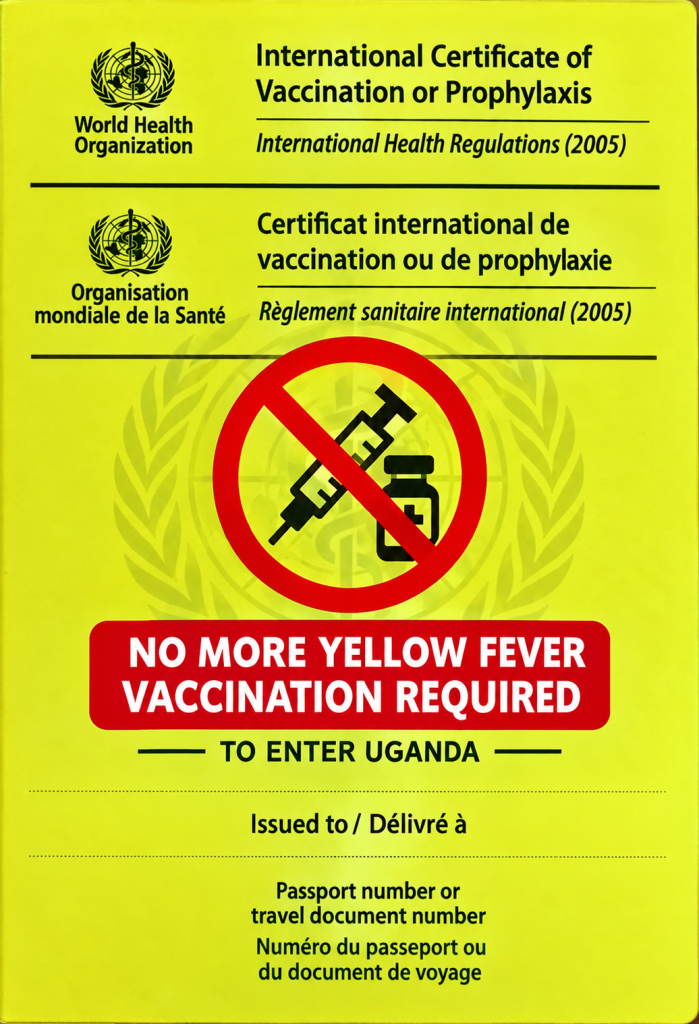
No Yellow Fever Cards: All international travellers were requested by Uganda’s immigration policy to present a valid yellow fever vaccination for entry. However, the Uganda Citizenship and Immigration Control (NCIC) confirmed in an official notice dated October 2, 2026, that this certificate requirement has been removed. Therefore, in practical terms, visitors no longer need a yellow fever card to pass border control. Travellers should note that visa applications and entry forms have been updated accordingly. The Uganda Tourism Board requested this clarification on entry rules, thus reflecting the sector’s interest. However, importantly, Uganda’s Ministry of Health still recommends vaccination for anyone going to high-risk areas.
What causes yellow fever?
Yellow fever is caused by a flavivirus (an RNA virus) found in Africa and South America. The virus is maintained in natural cycles between mosquitoes and primates. In Uganda, mosquitoes transmit the virus from infected hosts to other humans. Monkeys serve as the primary wild reservoir, whereas mosquitoes become infected by feeding on viremic monkeys or humans.
Symptoms of Yellow Fever
The yellow fever virus can range from mild to life-threatening; therefore, it’s always advisable to be conscious about the signs and symptoms you experience when feeling any fever. Early symptoms typically start 3-6 days after an infected mosquito bite, and these include flu, fever, chills, severe headache, back and muscle pain, nausea/vomiting, fatigue and weakness. About 1 in 7 patients progress to a severe form after a brief remission. Once infected, survivors usually gain lifelong immunity, whereas for those who enter the severe stage, the fatality rate can be 30-60%.
Treatment and Care
In case a yellow fever infection is suspected, seek medical care immediately. There no specific antiviral treatment for yellow fever, though care is supportive; ensure rest, adequate hydration and use medications such as paracetamol to reduce fever and relieve body aches. Severe cases require intensive hospital care with oxygen, blood transfusions and monitoring of liver and kidney function.
Prevention Measures
The best protection is to get vaccinated and to avoid mosquito bites. The World Health Organization recommends the live-attenuated yellow fever vaccine for all eligible travellers to Uganda since one dose provides long-term immunity for most people. Even though Uganda no longer requires the certificate, health authorities strongly advise vaccination to minimise the risk of spreading yellow fever.
Use insect repellent on exposed skin, wear long-sleeved shirts and pants, stay in screened or air-contained rooms or use bed nets if sleeping outdoors, and drain stagnant water near lodges to reduce mosquito breeding. Travellers are recommended to visit health clinics at least 4-6 weeks before planning for their vaccination departure.

