
 Explore Tsavo West National Park, a premier destination in Kenya that promises great wilderness adventures. Well-known for its Land Lava, Man-eaters, Springs, and spectacular sunsets, Tsavo West National Park forms part of the extensive Tsavo National Parks. The park’s fame dates back to the man eating lions that killed 100s of people during the railway construction and the highway around the colonial era. The Tsavo West Game Park happens to be Kenya’s 2nd biggest park with the land area coverage of 9,065 sq. km.
Tsavo West Park boasts of its extensive savanna ecosystem, abundant wildlife, and breathtaking volcanic landscapes. A visit to Tsavo West National Park guarantees you captivating wilderness adventures as you navigate via its scenic volcanoes, Mzima springs, lava flows and more.
Location
Tsavo West National Park is spectacularly set in Southeastern Kenya, about 240 km off from the heart of Nairobi. Access to the park can be via the western route of the Mombasa-Nairobi highway. Officially, Tsavo West Park was founded in 1948 and takes its name from the beautiful Tsavo River.
Major Attractions in Tsavo West National Park
The Tsavo West National Park prides itself of diverse attractions ranging from wildlife and other natural features.
Wildlife to see
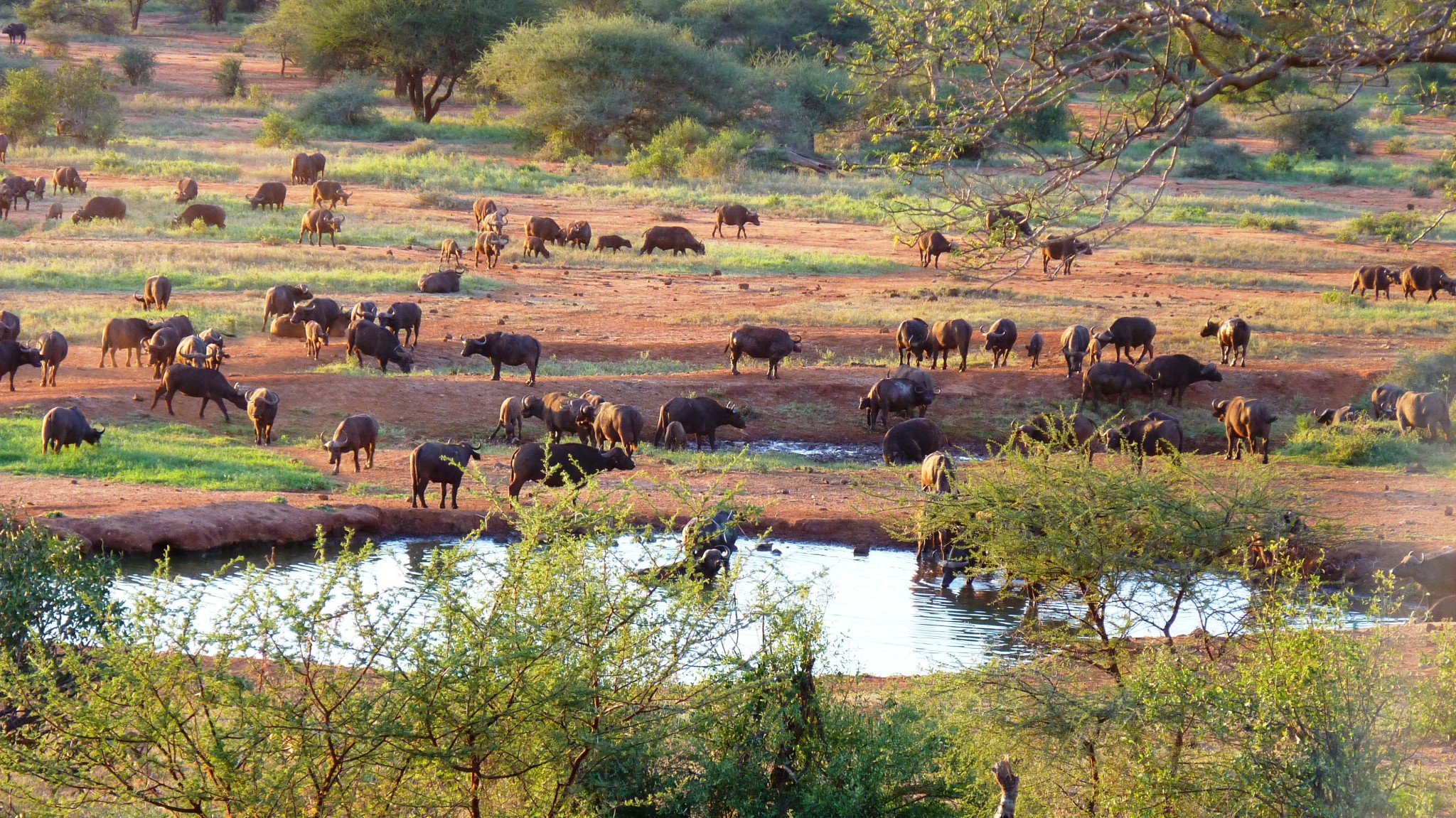
The diverse habitats of Tsavo West Park hold huge profusions of wildlife of savanna dwelling species. Top wildlife to encounter on Kenya tour in Tsavo West National Park include cape buffaloes, zebras, wild dogs, leopard, cheetahs, giraffes, elephants, crocodiles, lions, dik-diks, mongoose, rhinos, hippos, waterbucks, gerenuk, and lesser kudus.
The park features breathtaking landscapes characterized by savanna ecosystem such as scrublands, open grasslands, acacia woodlands, riverine areas, and more. Geological features of great importance to explore include lava flows, caves, volcanoes and more perfect for visitors to begin their hiking adventures.
While at Tsavo West Park, expect to enjoy the magnificent Mzima Springs –the crystal-clear water flow where hippos and fish can be spotted. The park also holds the distinct Shetani Lava flow, imposing Chaimu volcano, and Lake Jipe.
Bird species
A total record of about 600 species of birds reside in the Tsavo West National Park making it an essential birding destination. Among the birds to encounter include the red-billed parrot, Taita fiscal, Somali ostriches, Shelley’s starling, Basra reed warblers, Somali bee-eaters, Somali bunting, rufous chatterer, African finfoot, Narina trogon, red-backed shrike, Northern brownbul, marsh warblers, common whitethroat, pangani long claws, lesser kestrel, and great cormorant.
Tsavo West National Park also protects birds such as African spoonbill, African sacred ibis, glossy ibis, hadada ibis, reed cormorants, African darters, great white pelicans, pink-backed pelicans, African woolly-necked stork, saddle-billed stork, yellow-billed stork, flamingoes, double-banded courser, brown-winged courser, Somali courser, collared pratincole, Small buttonquail, common greenshank, curlew sandpiper, black crakes, African swamphen, gray crown crane, and swift birds.
Additional birds to identify in the Tsavo West include square-tailed nightjar, freckled nightjar, Donaldson smith’s nightjars, Nubian nightjar, plain nightjar, cuckoos, coucals, Kori bustards, hartlaub’s bustards, buff-crested bustard, white-bellied bustard, sandgrouse, ducks, guineafowl, and more.
What to do in Tsavo West National park
Tsavo West National Park is an enriching wildlife tour destination in Kenya with diverse experiences awaiting for you to enjoy. Here is a checklist of exciting things to do on Kenya safari in Tsavo West.
Game drives
Guided game drive promise nature enthusiasts great encounters of Tsavo West National Park. The park shelters a good population of wildlife to be encountered including giraffes, lions, hyenas, buffaloes, Kudus, topis, cheetahs, and zebras. Visitors who are keen enough can also observe elands, gazelles, aardvarks, duikers, caracals, bushbucks, to mention but a few. A 4×4 safari vehicle is essential for your smooth navigation through the park’s game tracks as you search for your favorite wildlife.
Birding
Bird watching in Tsavo West takes you on a search for diverse bird species. Some of the birds to expect to come across during the birding excursion include the Eastern black-headed oriole, River warblers, African fin-foot, Somali ostrich, Narina trogon, corncrake, pangani long claw, martial eagle, white-faced whistling ducks, blue-billed teal, southern pochard, doves, sand grouse, purple-crested turacos, African jacanas, greater painted-snipe, lapwings, coursers, plovers, skimmers, and flamingoes.
Visitors can also identify birds such as pelicans, bitterns, vultures, Eurasian scops-owl, African wood-owl, pearl-spotted owlet, spotted eagle-owl, green wood hoopoes, Abyssinian scimitar bill, southern ground-hornbill, and more. A successful birding tour requires you to have a good camera, a pair of binoculars, and other essentials.
Rhino watching/tracking
A safari in Tsavo West also includes rhino watching. The Ngulia rhino sanctuary is such a special place to visit to encounter black rhinos. The Ngulia sanctuary is 90 sq. km and protects rhinos.
Where to stay
Tsavo West Game Park features budget, midrange, and luxury lodges. They include Hunters Lodge, Lions Bluf Lodge, Severin Safari Camp, Ngulia Safari Lodge, Voyager Ziwani Tented Camp, Severini Kitani Bandas, Sagala Lodge, Kiboko Camp, Rhino Valley Lodge, and others. When planning for your Kenya wildlife safari, you can choose a comfortable place to stay based on your budget or travel preference.
When to visit the park
Tsavo West Park is open for exploration at any time of the year. But to experience the best of its game viewing excursions, then consider traveling to the park around the dry months of the year. The dry months fall around June, July, August, September, and October then another phase begins from January to February. During the dry months, the weather conditions are favorable in that visitors enjoy smooth drive through the park in search for wildlife.
Months to avoid are the rainy or wettest months of the year. These include March, April, and May then October to November.
How to get there
Access to the Tsavo West National Park is possible by road/air. Road travel involves driving for 240 km from Nairobi on the Nairobi-Mombasa route that is about 5-6 hours. From Mombasa, you can access the park via the Southern gate of the Mtito gate. By air, visitors can take the booked flight which sets off from the Wilson Airport/Mombasa or Jomo Kenyatta International Airport to any of the available airstrips in Tsavo West National Park that is Ziwani Airstrip, Tsavo Gate Airstrip, and Kamboyo Airstrip.
