
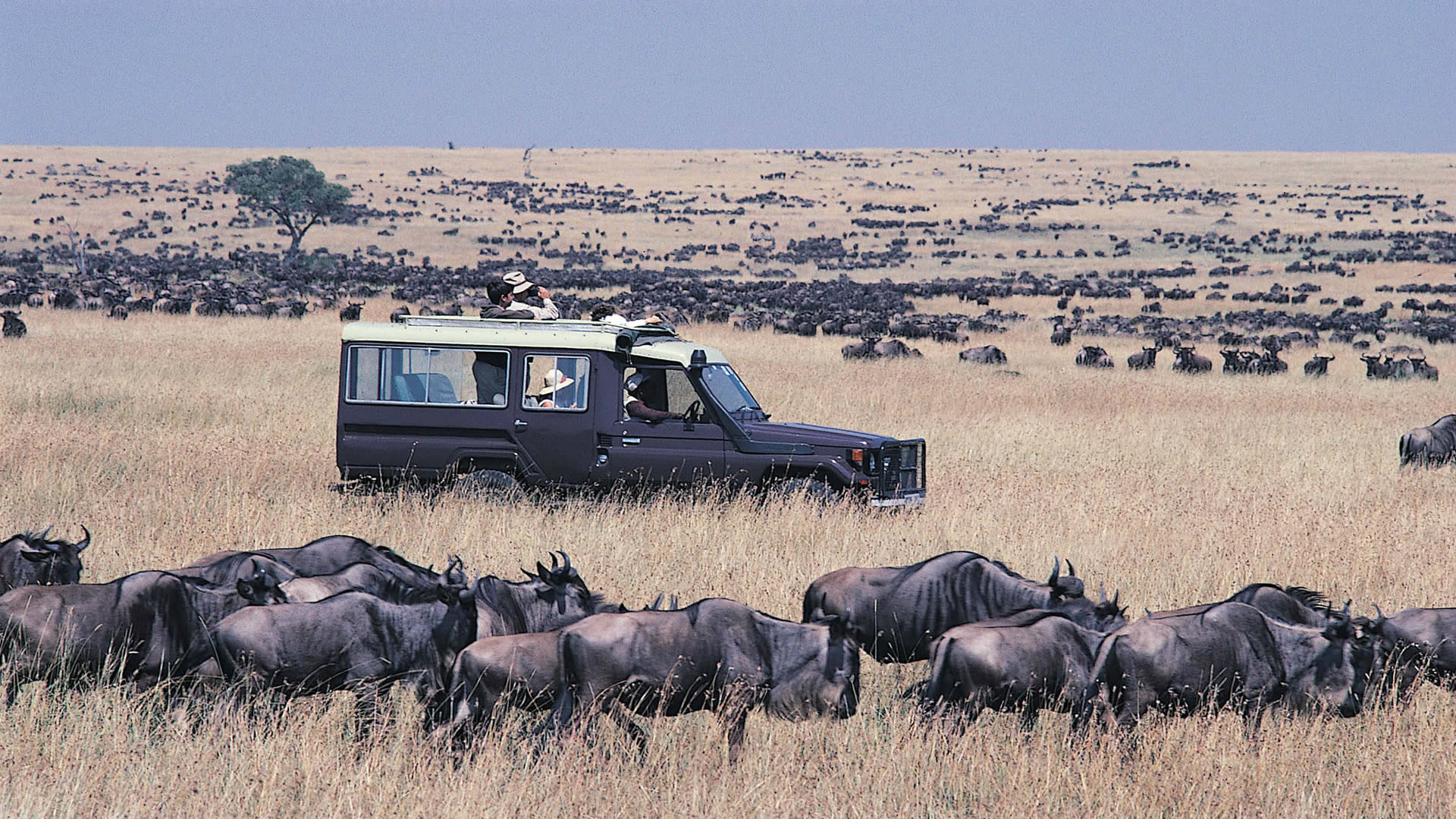
 Masai Mara National Reserve is one of the leading wildlife reserves in Africa, a destination full of amazing encounters. Masai Mara (Maasai Mara) Reserve is located in Narok County in Southwestern Kenya. The reserve extends over the land area of 1510 sq. km comprising of vast savanna grassland. Masai Mara Reserve ecosystem extends to the border with Tanzania.
Maasai Mara National Reserve was officially established in 1961 and takes its name from the Maasai people. The Maasai people live adjacent to the reserve but previously, they inhabited the present Maasai Mara Reserve area. Maasai Mara boasts of its diverse faunal and floral species which make it East Africa’s most preferred wildlife tour destination.
Masai Mara is set in the Great Rift Valley area. The ecosystem of Masai Mara consists of the Maji Moto, Mara Triangle, Kerinkani, Ol Chorro Oirowua, Oloirien, Olkinyei, Ol Derkesi, Kimintet, Lemek, Koiyaki, Mara North, and Siana. The reserve is drained by 3 main rivers including the Sand River, Talek River, and Mara River.
The landscape of the Mara Reserve is characterized by seasonal rivers, vast grasslands, acacia trees. The Eastern end of the reserve is notably the most explored region in the Maasai Mara. The eastern section is controlled by the Narok County council. Other section is managed by the local Maasai communities with lead by the elected Masai leaders. The Mara triangle is where you can encounter the Great Migration in the Masai Mara Reserve.
History
Masai Mara Reserve was designated as a Wildlife Sanctuary in 1961. It was around the 1960s when the present day Maasai Mara Reserve occupied the land area of only 520 sq. km and comprised the Mara Triangle area. Later, the sanctuary expanded to encompass the Eastern part and later, it became a Reserve with its land area coverage at 1821.
In 1974, Masai Game Reserve was declared as a National Reserve and about 159 sq. km of its land was given back to the local community. In 1984, the reserve’s size kept reducing to the present 1510 sq. km.
The Maasai people are among the popular ethnic groups in Africa. They share a lot with the Karamojong of Northeastern Uganda. A section of the Maasai people also reside in Tanzania around the Serengeti plains. They have distinct cultures, traditions, and dances worth sharing with the world.
Key Attractions in Masai Mara
The Masai Mara is endowed when it comes to wildlife and bird species. On Kenya safari in Maasai Mara, expect to explore myriad of wildlife including large and small mammals, reptiles, and others.
Wildlife
Maasai Mara Reserve is a home to all the Big 5 game (leopards, lions, elephants, buffaloes, and rhinos). Additional wildlife to encounter on Kenya wildlife tour in Masai Mara include topis, zebras, wildebeest, giraffes, impalas, duikers, hartebeest, Thompson’s gazelles, and roan antelopes. The reserve also provides refuge to wildlife such as hippos, cheetahs, crocodiles. Jackals, foxes, serval cats, and hyenas.
Bird species
The Mara conservancy shelters alone shelters over 470 bird species. The diverse bird species make the Masai Mara a great birding destination. The birds of interest on birding excursion in the Mara Conservancy area include long-crested eagle, secretary bird, African pygmy falcons, ostriches, lilac-breasted rollers, cattle egrets, rufous-bellied herons, little egrets, little bittern, African darters, common squacco-heron, black-crowned night-heron, dwarf bittern, black-headed heron, white stork, black stork, purple heron, African openbill stork, saddle-billed stork, sacred ibis, African spoonbill, and Egyptian vultures.
Masai Mara also holds bird species such as lesser spotted eagle, hooded vulture, ruppell’s vultures, African white-backed vulture, white-headed vultures, lappet-faced vultures, tawny eagle, African marsh harrier, Gabar goshawk, bat hawk, African cuckoo-hawk, black kite, bateleur, western banded snake eagle, pallid harriers, European honey-buzzard, Eurasian marsh harrier, water thick-knee, black-winged stilt, African jacanas, black-bellied bustards, and ringed plovers.
If you are keen enough, expect to find birds such as Senegal lapwing, Caspian plovers, Kittlitz’s plovers, Spur-winged lapwing, Greater painted snipe, African olive pigeon, emerald-spotted wood-dove, African green pigeon, ring-necked dove, cooks, white-browed coucals, owls, nightjars, swifts, speckled mousebirds, trogons, kingfishers, bee-eaters, wood hoopoes, hornbills, and others.
Activities to do
Experience the Great Migration
The Great Migration is what makes the Masai Mara safari complete. This is a powerful annual event where over 1.5 million wildebeest move through the Mara-Serengeti ecosystem in search for water and pastures. During the wildebeest migration, wildebeests are accompanied by 100s of zebras, gazelles, and many other grazers.
The unforgettable bit of the Great Migration is the Mara River crossing where these mammals cross the crocodiles dominated river. The best months to experience the Kenya migration are July, August, September to October.
Game drives
A game drive in the Mara Reserve allows you to search for different wildlife especially the Big 5 game plus others. To experience the best of Masai Mara’s game drive, you need a 4×4 safari car with a pop up roof to allow you enjoy clear views of various wildlife. You can go for a day game drive or night.
Hot air balloon
If you enjoy aerial game viewing, then a visit to Maasai Mara should be a must-do. Balloon excursions take you on enriching aerial game viewing where you enjoy encounters of large and small mammals as they roam in the savanna plains. Visitors can book the morning or late afternoon/evening balloon excursion.
Visit the Maasai village
A visit to the Maasai village allows you to meet and interact with the Maasai people in their community. This is a thrilling cultural expedition where you get to explore the distinct traditions and cultures of the Maasai people.
Horseback safaris
Horseback safaris present a unique option of exploring and experiencing the wonders of Masai Mara. You get a chance to navigate around the Mara plains on a horseback instead of using a 4×4 safari vehicle.
Nature/walking safaris
Masai Mara can be explored perfectly even on a guided walking safari or nature walk. It is a great way to have a deep immersion into the hidden habitats of Maasai Mara as you unearth its wonders.
When to visit Maasai Mara
To experience the best of the Great migration consider visiting Maasai Mara around July to October. These are the dry months of the year also characterized by low or no rains with general conditions all favoring visitor navigation as they go about their guided game viewing. These are also the best months to encounter the Big 5 game plus other wildlife species.
Where to stay (lodges and camps)
Accommodation in and around Maasai Mara comprise of budget, midrange and luxury thus guaranteeing everyone an option where they can have an overnight. Top lodges and camps in Masai Mara include Kichwa Tembo Tented Camp, Bateleur Camp, Cottars 1920s Safari Camp, Fig Tree Camp, Fairmont Mara Safari Club, Game watchers Adventure Camp, Rekero Camp, Naboisho Camp, Mara Explorer, Elewana Sand River Camp, Wilderness Camp, Serova Mara Game Camp, and others.
Getting to the Maasai Mara Reserve
Maasai Mara National Reserve can be accessed by road or flight. Road travel to Mara Reserve is possible starting from Nairobi which is approximately 6 hours’ drive. A 4×4 safari car is more recommended for all successful road trips to Masai Mara. By flight, you can set off from Nairobi and land at the airstrip in the reserve. The active airstrips that serve Maasai Mara Reserve include Ngerende Airstrip, Keekorok, Serena, Kichwa, Musiara Airstrip, Ol Kiombo Airstrip, and others.
